

How to Plan for It — Beyond the Sales Pitch
Over the last several years, a wave of reports from insurance companies — often presented by insurance agents or advisors — has stirred real concern among people considering retirement, or just entering it. Long-term care is frequently cited as one of the single largest threats to a retirement plan, and it tends to surface right in the “red zone”: the ten years before retirement begins.
Memory care , in particular, gets a lot of attention, since the costs of care can run from $10,000 to $30,000 per month. Numbers like that are enough to make anyone nervous.
This article is longer than most of what we publish, because the topic deserves it. Long-term care is usually discussed in a way that's designed to alarm rather than inform. Our goal here is to reframe the conversation: what long-term care actually costs , how people typically end up paying for it, and what strategies are available to plan for it wisely — without the scare tactics.
Let's unravel the statistics and look at reality.
What Long-Term Care Actually Costs
Cost estimates vary depending on which research report you're looking at, but the ranges below give a reasonable national picture:
| Care Type |
Approx. Annual Cost |
Approx. Monthly Cost |
| Adult Day Care |
$18,000 – $27,000 |
$1,500 – $2,250 |
| Assisted Living |
~$76,000 |
~$6,300 |
| Assisted Living, Memory Care |
~$96,000 |
$10,000 – $30,000* |
| Nursing Home, Semi-Private Room |
~$118,000 |
~$9,800 |
| Nursing Home, Private Room |
~$136,000 |
~$11,300 |
*Memory care is typically billed monthly rather than as a flat annual figure, which is why the range is wider. Sources: Center for Retirement Research at Boston College; Milliman, which tracks annual increases in long-term care costs nationally.
Now that the costs are laid out, don't let them scare you — here's why. The reports and sales presentations that cite these figures almost always treat them as ongoing expenses for several years, or even a decade or longer. That assumption is where most long-term care plans go off track.
The Risk Most Planning Gets Wrong: Cost Distribution
Cost distribution is the single most important — and most overlooked — piece of this issue. What is it? Rather than relying on projected worst-case scenarios, we can look at actual lifetime data. Out of 100 people who reach age 65:
| Lifetime Long-Term Care Spending |
Out of 100 People Age 65+ |
Share |
| Never use paid long-term care |
52 people |
52% |
| Spend under $30,000 |
12 people |
12% |
| Spend $30,000 – $300,000 |
18–20 people |
≈19% |
| Spend over $300,000 |
14–15 people |
≈15% |
For more on cost distribution, see the CareScout /Genworth Cost of Care Survey, the Milliman LTC Index, or the CMS Provider Cost Reports at Data.CMS.gov. Because these figures are adjusted for inflation, they'll give you the most current picture available.
In other words, the data tells us that roughly 85% of retirees will not experience catastrophic long-term care costs — about 15% will. What we're really planning for here is the “tail risk”: the smaller but real chance of landing in that higher-cost group. As with most areas of personal financial planning, there's no one-size-fits-all answer. This is exactly why we believe you need an objective advisor to guide you, someone who takes the time to understand your unique circumstances and helps you navigate these decisions with your best interests in mind.
Who Needs to Plan the Most? The Middle-Class Wealthy
It may seem counterintuitive, but the people who need to plan hardest for long-term care aren't the ultra-wealthy — they're what we'd call the “middle-class wealthy.” This group typically holds $500,000 to $3 million in net worth, often $750,000 to $2 million in investable assets.
Why are they the most exposed?
- They've done all the right things to prepare for retirement — but that preparation is precisely what's at risk.
- Their assets are too high to qualify for public assistance programs.
- They don't have the $4 million to $10 million in assets that could effectively insulate them from a long-term care event.
This group will very likely end up paying for care in some form. The real question isn't whether — it's how.
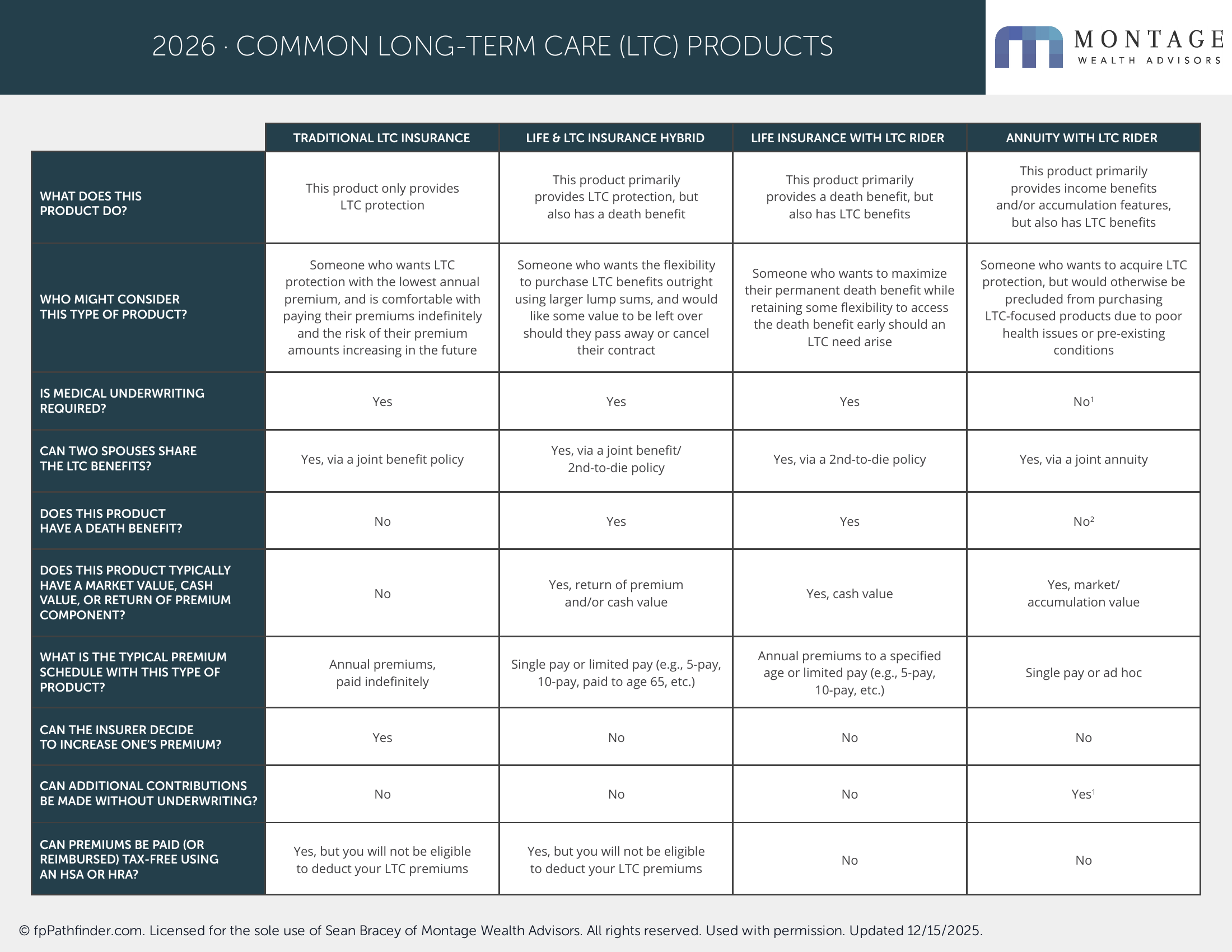
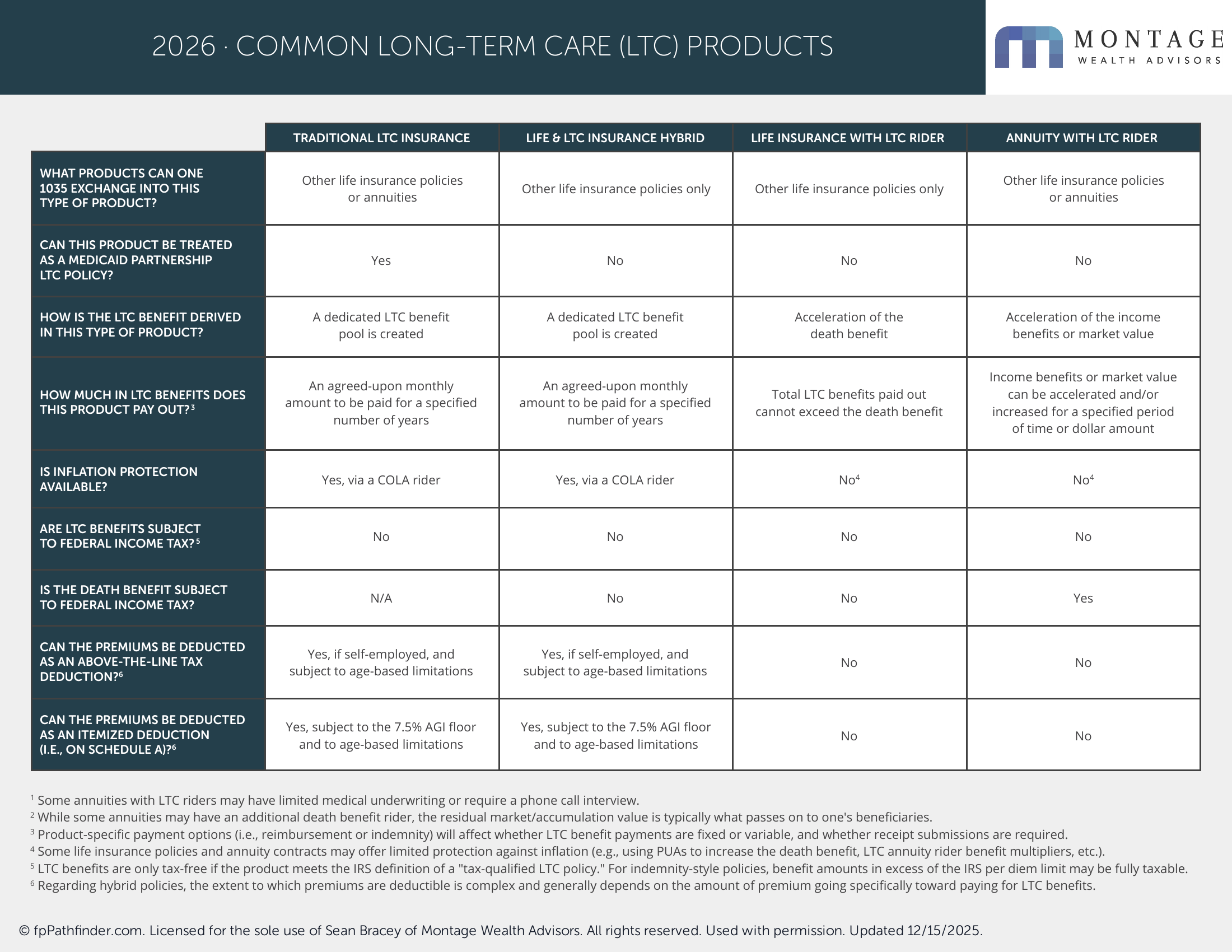
The main paths are: paying out of pocket (self-funding), purchasing a standalone long-term care insurance policy, or purchasing a life insurance policy with a long-term care rider attached. None of these options is inherently right, wrong, good, or bad — each is designed differently, and each comes with trade-offs.
Remember what you're actually insuring against: a 52% chance it never happens, and roughly a 70% chance your lifetime cost stays under $300,000. Sit with that for a minute — and compare it to the insurance-industry hype you've likely encountered, even from well-meaning agents and advisors.
Option 1: Self-Funding a Dedicated LTC Account
If you choose to self-fund, the idea is simple: open a dedicated savings or conservative investment account and set aside a fixed amount each month toward a target goal. Starting at age 60, saving $10,000 per year at a modest 6% growth rate would build to approximately $ 309 ,000 — landing on the $300,000 threshold that covers roughly 70% of retirees. Start in your 50s instead, and you'll build an even stronger cushion. If you end up among the 52% who never need long-term care, the full balance simply passes to your heirs.
The University of Colorado estimates the median age for entering long-term or nursing care at 83–84.
It's also worth remembering that this account doesn't have to cover the entire cost of care on its own. Your regular monthly cash flow — pension, Social Security, rental income, IRA distributions, and other income sources — all help offset monthly long-term care expenses. Combine that ongoing income with the 70% probability of staying under $300,000 in lifetime costs, and most people in this situation are in a statistically strong position.
Option 2: Traditional Standalone Long-Term Care Insurance
This option tends to make the most sense for people who have accumulated a reasonable amount of wealth but fall short of the ultra-wealthy threshold — or for those who, due to health or family history, carry a higher-than-average risk of needing care. It's also a fit if you'd rather transfer a large part of the risk to an insurance company, reducing the potential drain on your investments and estate and preserving more for your heirs.
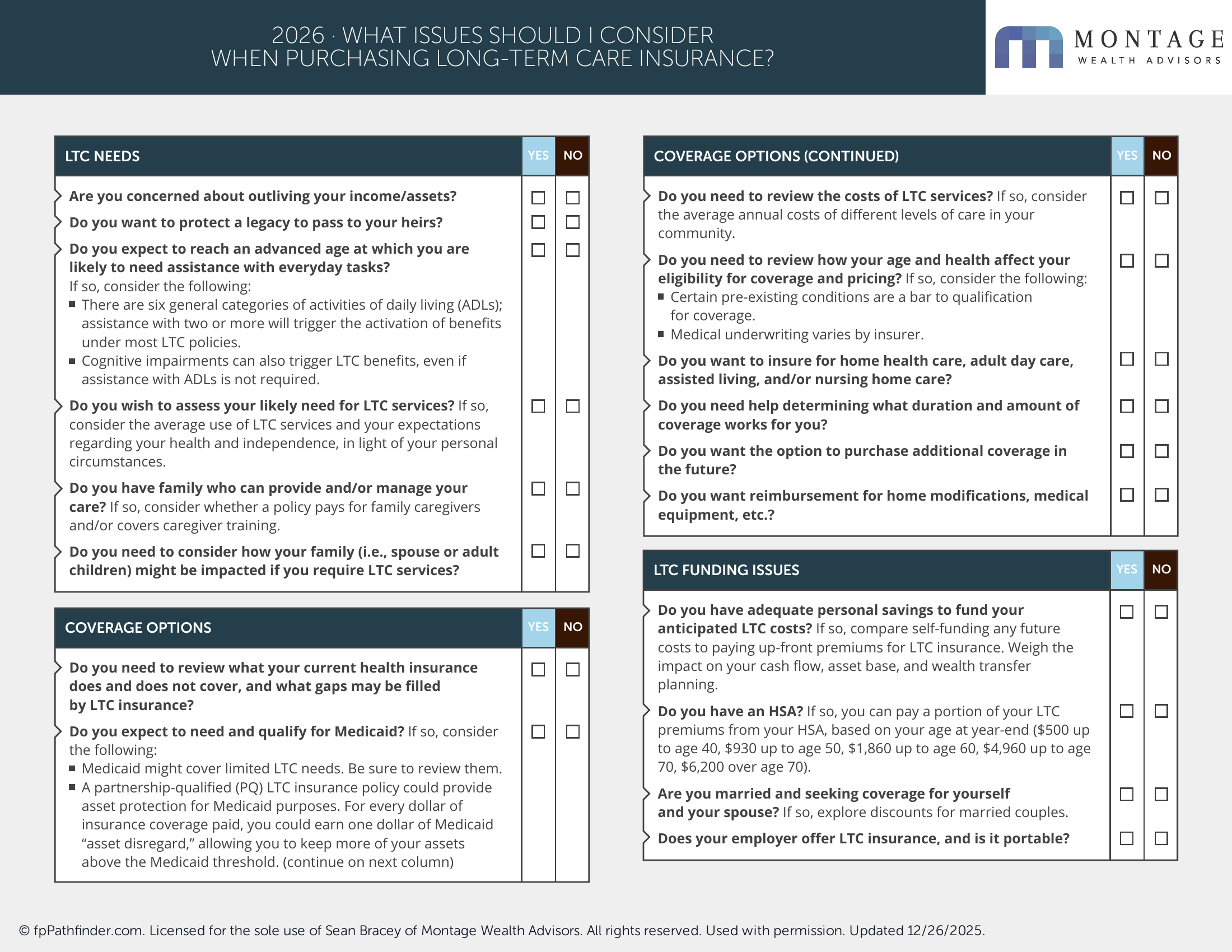
The age at which you purchase a policy makes a significant difference in both monthly and lifetime cost. These policies also come with design choices: your inflation adjustment rate, daily benefit amount, how many years benefits last, and the elimination period — the waiting period (commonly 30 days to 3 months) before benefits begin. The question here is how long you could comfortably self-fund before benefits kick in.
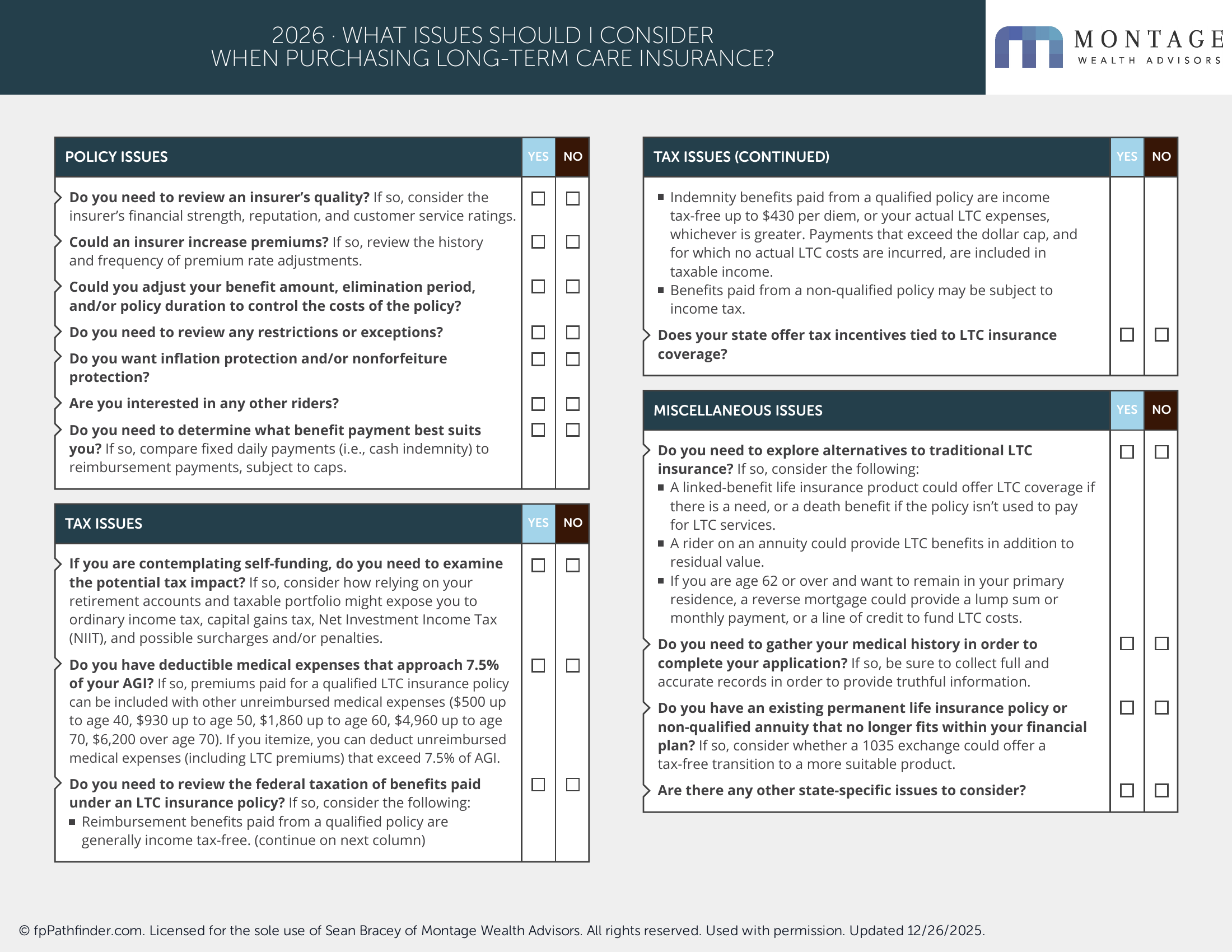
Today, a couple might pay roughly $5,000 per year for coverage. Extend that over 28 years — starting at age 55 and paying through the statistical median age of 83 — and you'd pay approximately $140,000 in premiums. Because premiums will increase over the life of the policy, your actual total cost will be higher. Some policies have seen premium increases of 80–100% over their lifetime; policyholders who want to avoid that increase can often opt for reduced benefits instead.
If you never use the benefits, there's no refund and no cash value — it's a “use it or lose it” type of plan, and the premiums stay with the insurance company. To trigger benefits, you typically need to demonstrate an inability to perform two of six Activities of Daily Living (ADLs), or a diagnosed cognitive impairment. Health and family history often determine how likely this coverage would actually be used — for the average retiree, it frequently goes unused or only partially used.
Option 3: Life Insurance with a Long-Term Care Rider
Here's how this works: you purchase a life insurance policy and add a long-term care rider , or add a long-term care rider to an existing cash-value policy (this option doesn't work with term insurance). Adding the rider increases the underlying cost of the policy, but in exchange, if you experience a long-term care event, you can begin accessing part of the death benefit each month while you're still living. As with standalone LTC insurance, this is typically triggered by an inability to perform two of six ADLs, or by cognitive impairment.
As you draw monthly payments, you're reducing the policy's death benefit — essentially accessing that benefit early, without having to pass away to collect it.
The advantage here is flexibility: if you never need long-term care, your heirs receive the full death benefit. If you do need care during your lifetime, you can access that same benefit when you need it most. This structure removes the “use it or lose it” risk that comes with traditional standalone LTC insurance — the benefit pays out one way or another, either for care or at death. For the right situation, especially if you already hold a cash-value policy, adding a rider can cost less than a full traditional long-term care policy.
Option 4: Hybrid (Linked-Benefit) Insurance
A hybrid policy is a form of life insurance funded by either a single lump-sum payment or a short series of payments — typically spread across one, two, or three years. These are large payments, usually $100,000 or more, and the benefit is leveraged: a $100,000 single payment, for example, might convert into $300,000 of coverage available for a care event.
If the insurance is never used, a life insurance benefit still pays out — often slightly more than the premium paid. One company, for example, offers a $100,000 single-pay policy with a $125,000 death benefit payout if care is never needed. Rates and payout structures vary by carrier and change over time, so this is very much a “get all the details and work through it with an advisor” type of decision.
Comparing the Options at a Glance
| Strategy |
Best Fit |
Trade-Off |
| Self-Fund (Dedicated LTC Savings) |
Those with flexibility, discipline to save, and comfort carrying the risk themselves. |
No guaranteed benefit; requires consistent saving over years. |
| Standalone LTC Insurance |
Those wanting to transfer a large share of the risk off their own balance sheet. |
Premiums can rise over time; benefit is “use it or lose it.” |
| Life Insurance with LTC Rider |
Those who want a benefit paid out either way — for care or as a death benefit. |
Higher cost than term insurance; requires cash-value policy. |
| Hybrid (Linked-Benefit) Policy |
Those with a lump sum available who want leverage plus a return-of-premium guarantee. |
Requires a large upfront payment, typically $100,000 or more. |
Each of these strategies solves a different problem, for a different kind of situation. There's no single “best” option — every one of them comes with real trade-offs, pros, and cons.
The Bottom Line
The most important point we want to leave you with: before choosing any of these paths, sit down with a fiduciary advisor who can give you an objective opinion and build a plan suited to your specific circumstances. Long-term care planning is far from one-size-fits-all — your health history, family history, income sources, net worth, and overall estate goals all shape which option (or combination of options) makes the most sense.
Long-term care doesn't have to be the thing that derails an otherwise well-built retirement plan. When you look past the industry's worst-case marketing and toward the actual data — a 52% chance you'll never need paid care, and roughly a 70% chance your lifetime costs stay under $300,000 — long-term care becomes a manageable planning problem rather than a source of fear. The goal isn't to eliminate the risk entirely; it's to right-size your response to it, so your retirement income, your investments, and what you leave behind are protected no matter which path your later years take. That's precisely the kind of planning conversation we welcome at Montage Wealth — helping you look at the real numbers, weigh your real options, and build a strategy that lets you keep more of what you've worked for.
This article is for general informational and educational purposes only and does not constitute personalized financial, insurance, or legal advice. Long-term care cost figures are approximate, vary by provider and geography, and are drawn from third-party sources believed to be reliable but not guaranteed. Please consult a qualified fiduciary advisor before making decisions about long-term care funding or insurance strategies. Securities offered through Cetera Wealth Services, LLC, member FINRA/SIPC. Advisory services offered through Cetera Investment Advisers LLC, a Registered Investment Adviser. Cetera is under separate ownership from any other named entity.